


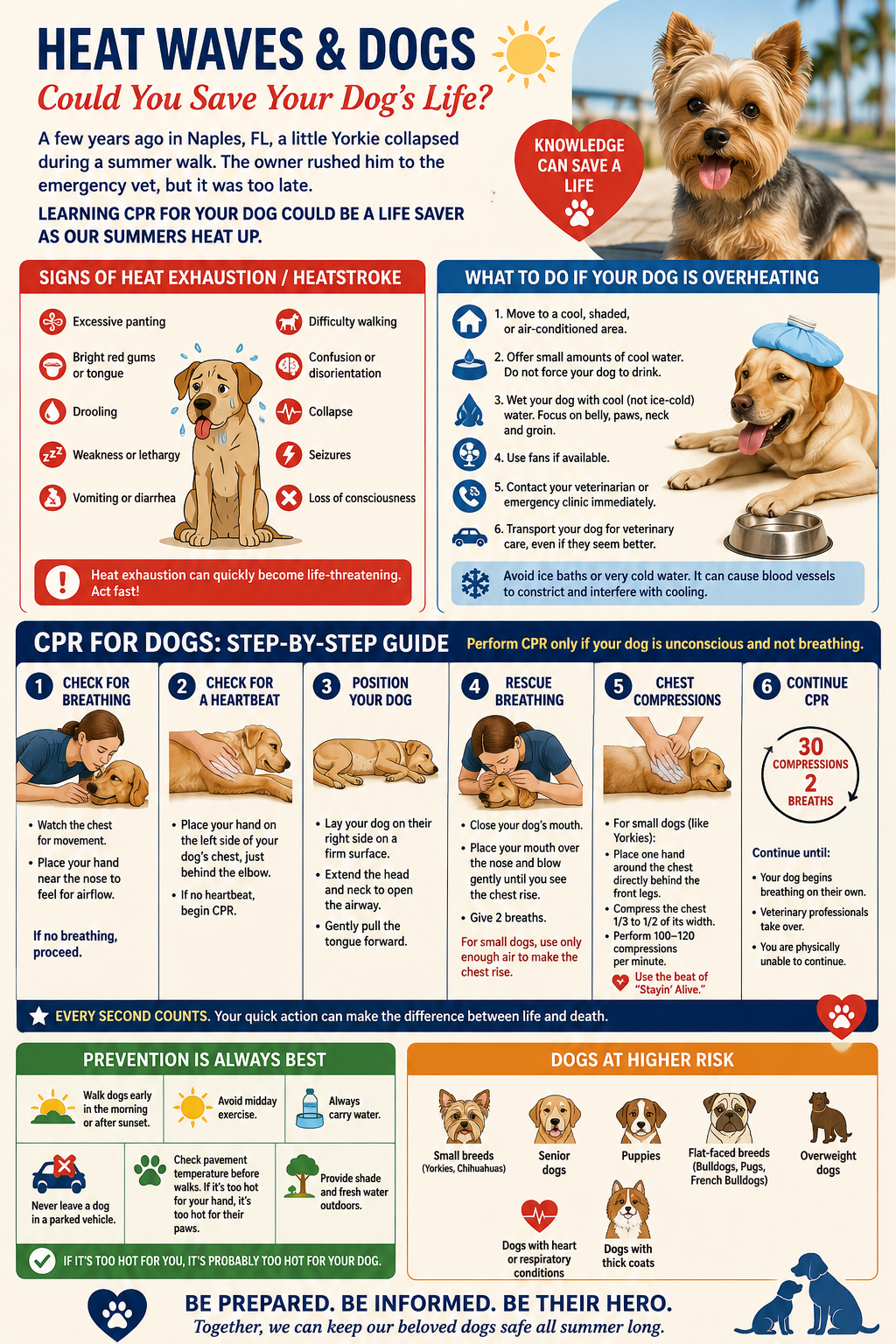
A few years ago, here in Naples, Florida, a heartbreaking tragedy unfolded on what seemed like an ordinary summer day. A local resident was walking their beloved little Yorkshire Terrier during the afternoon heat. Without warning, the tiny dog collapsed. The owner rushed their companion to the emergency veterinary hospital, desperately hoping for a miracle.
Sadly, it was too late.
Heat-related emergencies can happen faster than most people realize, especially in Florida where summer temperatures and humidity can create dangerous conditions within minutes. As our summers continue to get hotter, every dog owner should know how to recognize heat stress, prevent heatstroke, and administer CPR in an emergency.
Knowing what to do in those critical moments could save your dog’s life.
Why Dogs Are Vulnerable to Heat
Unlike humans, dogs do not sweat through their skin to cool themselves. They primarily regulate body temperature by panting. When temperatures soar and humidity levels climb, panting becomes less effective, and a dog’s body can quickly overheat.
Certain dogs face an even greater risk, including:
- Small breeds such as Yorkies and Chihuahuas
- Senior dogs
- Puppies
- Overweight dogs
- Dogs with heart or respiratory conditions
- Flat-faced breeds such as Bulldogs, Pugs, and French Bulldogs
- Dogs with thick coats
— Even a short walk during the hottest part of the day can become dangerous.
Signs of Heat Exhaustion and Heatstroke
Heat exhaustion can progress rapidly into life-threatening heatstroke.
Watch for:
- Excessive panting
- Bright red gums or tongue
- Drooling
- Weakness or lethargy
- Vomiting
- Diarrhea
- Difficulty walking
- Confusion or disorientation
- Collapse
- Seizures
- Loss of consciousness
If your dog shows any of these symptoms, immediate action is critical.
What To Do If Your Dog Is Overheating
- Move your dog to a cool, shaded, or air-conditioned area immediately.
- Offer small amounts of cool water. Do not force your dog to drink.
- Wet your dog with cool (not ice-cold) water, focusing on the belly, paws, neck, and groin area.
- Use fans if available.
- Contact your veterinarian or emergency clinic immediately.
- Transport your dog for veterinary care, even if they appear to recover.
Avoid using ice baths or extremely cold water, which can cause blood vessels to constrict and interfere with cooling.
When CPR May Be Needed
In severe heatstroke cases, a dog may stop breathing or their heart may stop beating. This is when CPR can become a lifesaving skill.
CPR should only be performed if your dog is unconscious and is not breathing.
Step 1:
Check for Breathing
Watch the chest for movement.
Place your hand near the nose to feel for airflow.
If there is no breathing, proceed immediately.
Step 2:
Check for a Heartbeat
Place your hand on the left side of your dog’s chest, just behind the elbow.
If you cannot detect a heartbeat, begin CPR.
Step 3:
Position Your Dog
Lay your dog on their right side on a firm surface.
Extend the head and neck to help open the airway.
Gently pull the tongue forward.
Step 4:
Rescue Breathing
Close your dog’s mouth.
Place your mouth over the nose and blow gently until you see the chest rise.
Give two breaths.
For small dogs, use only enough air to make the chest rise. Too much force can cause injury.
Step 5:
Chest Compressions
For small dogs such as Yorkies:
- Place one hand around the chest directly behind the front legs.
- Compress the chest approximately one-third to one-half of its width.
- Perform 100 to 120 compressions per minute.
A helpful rhythm is the beat of the song “Stayin’ Alive.”
Step 6:
Continue CPR
Alternate:
- 30 chest compressions
- 2 rescue breaths
Continue until:
- Your dog begins breathing on their own.
- Veterinary professionals take over.
- You are physically unable to continue.
Prevention Is Always Best
The safest approach is preventing heat emergencies before they occur.
Summer Safety Tips
- Walk dogs early in the morning or after sunset.
- Avoid midday exercise.
- Always carry water.
- Never leave a dog in a parked vehicle.
- Check pavement temperatures before walks.
- Provide shade and fresh water outdoors.
- Watch closely for signs of overheating.
A simple rule: If it’s too hot for you, it’s probably too hot for your dog.
Every Second Counts
The owner of that little Yorkie in Naples did everything they could once their dog collapsed. Unfortunately, heatstroke can move incredibly fast, especially in small dogs.
We hope you never have to perform CPR on your dog. But if the unthinkable happens, having the knowledge and confidence to act immediately could mean the difference between life and death.
Take a few minutes today to learn these lifesaving skills. Share this information with fellow pet owners. Together, we can help keep our beloved companions safe during Florida’s hottest months.
Because every dog deserves a chance to make it home safely.


